





Monitoring in an IUI Cycle
 21000+
Smiles
 35+
35+Parenthood Joy
 78%
78%Hope to Families
 30+
30+Specialists
Monitoring in an IUI Cycle
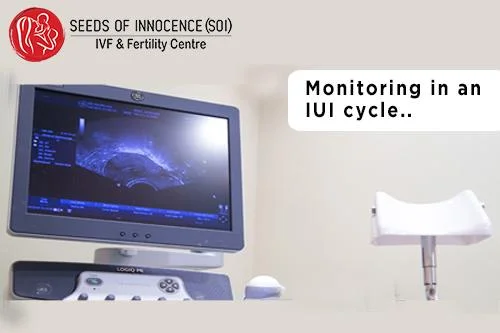
Ultrasound: can tell us not only about the ovarian reserve but also helps to adequately monitor the process of follicular and endometrial development and timely administration of human chorionic hormone (HCG).
Monitoring LH, E2, and progesterone during ovulation induction can determine follicular growth and competency, predict poor and hyper-response, and diagnose premature LH surge, premature luteinization. However, these tests are not recommended routinely.
Who requires Monitoring in an IUI Cycle?
Monitoring in an IUI cycle is used for couples undergoing IUI or ovulation induction. It helps time insemination and optimize the chance of conception.
How Does Monitoring in an IUI Cycle Work?
Ultrasound monitoring tracks follicular and endometrial development and guides timely administration of human chorionic hormone (HCG). Monitoring LH, E2, and progesterone during ovulation induction can determine follicular growth and competency, predict poor and hyper-response, and diagnose premature LH surge.
Monitoring in an IUI Cycle Procedure
Key aspects of monitoring in an IUI cycle:
Ultrasound assesses ovarian reserve and monitors follicular and endometrial development.
A follicle >10 mm in diameter typically grows at 2–3 mm per day. A mature follicle with a mature oocyte usually measures 18–24 mm, when trigger timing is decided.
Endometrial texture and thickness are evaluated; triple-line multilayer appearance at ovulation is optimal.
HCG or other trigger is given when follicles and lining are optimal. IUI or timed intercourse is scheduled accordingly.
Benefits of Monitoring in an IUI Cycle
Optimal stimulation in the IUI cycle typically aims for fewer than 4 follicles of size 18–19 mm, endometrial thickness around 8–10 mm, and trilaminar pattern. Cycle cancellation may be considered if more than six follicles or E2 levels exceed 1500 pg/ml.
Monitoring itself is low risk. Possible considerations:
No specific recovery is needed after monitoring visits. You can continue normal activities between scans.
Cost depends on the number of scans and hormone tests. Our team will provide a clear breakdown during your consultation.