




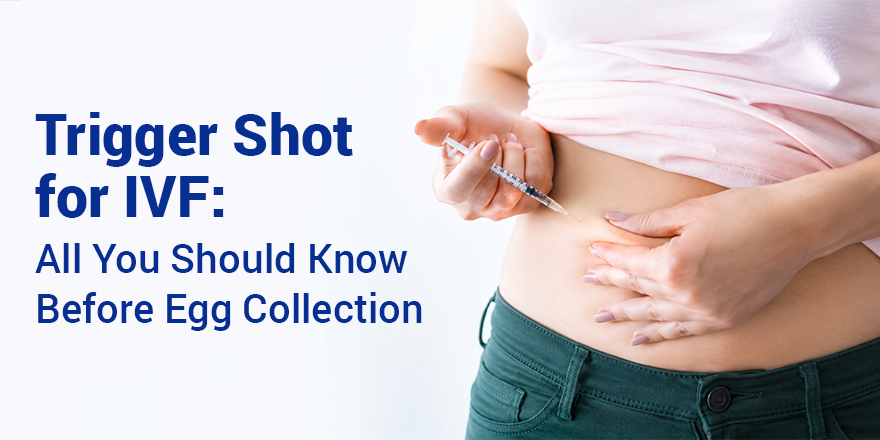
Trigger Shot for IVF: All You Should Know Before Egg Collection
For couples undergoing IVF, every step in the process is extremely important to guarantee its success. One of the crucial procedures during IVF is the IVF Trigger Shot procedure. Even though it is a simple injection process, it plays a very important role in the collection of eggs and the development of embryos.
At our clinic, Seeds of Innocens IVF, we ensure that our patients' ovarian response is properly evaluated so we can inject the trigger shot at the right time.
What is a Trigger Shot?
It is the hormone injection that is administered during the last days of ovarian stimulation during the IVF procedure. The main purpose of this procedure is to start the maturation of eggs for their further collection.
The injection replicates the natural increase of the LH that takes place during ovulation to stimulate the eggs to be prepared for fertilization.
Based on your choice of treatment, your fertility doctor may prescribe one of the following triggers to you:
Based on your age, ovarian reserve, hormone levels, and chances of OHSS (Ovarian Hyperstimulation Syndrome), there is a particular trigger injection suitable for you.
The importance of the Trigger IVF Injection
The trigger injection is one of the most important medications used in the process of IVF treatment because:
The injection replicates the natural increase of the LH that takes place during ovulation to stimulate the eggs to be prepared for fertilization.
Based on your choice of treatment, your fertility doctor may prescribe one of the following triggers to you:
Based on your age, ovarian reserve, hormone levels, and chances of OHSS (Ovarian Hyperstimulation Syndrome), there is a particular trigger injection suitable for you.
When Is the IVF Trigger Shot Taken?
The fertility doctor will track your development via:
Once the follicles have matured, the Trigger Shot IVF is taken about 36 hours before egg harvesting.
The injection could be:
The injection must be taken at the exact scheduled time since even a slight delay can impact the development of the eggs.
Importance of Timing
Timing is among the most critical factors influencing the success rate of IVF.
After taking the trigger shot IUI:
Failure to take or miss the trigger shot could lead to:
That is why fertility centers stress adherence to the schedule given by the doctor.
What Occurs after the Trigger Shot IVF?
After the trigger shot IVF is administered, patients are advised to go about their daily lives as they prepare for egg harvesting.
After 36 hours, the process of egg harvesting takes place using mild sedation.
After the harvesting process:
what is a trigger shot side effects?
An Trigger Shot is normally safe, though there are minor side effects.
They include:
Risk of Ovarian Hyperstimulation Syndrome (OHSS)
Another complication, which is relatively rare but serious, is Ovarian Hyperstimulation Syndrome (OHSS).
OHSS is caused by an excessive reaction of the ovaries to the drugs.
Women suffering from PCOS (Polycystic Ovary Syndrome) have a higher risk of OHSS.
Symptoms of OHSS:
Patients who have higher chances of developing OHSS are carefully monitored, and different triggers are prescribed at Seeds of Innocens IVF Center.
Can the Trigger Shot Influence the Result of a Pregnancy Test?
Yes,The trigger injections usually include hCG – the hormone that can be detected in the pregnancy test.
If you take a pregnancy test immediately after the shot, you will get a false-positive result since the hormone stays in your body.
Your doctor may advise you to:
Rate of Success with IVF Trigger Shots
It is worth noting that the trigger shot itself will not decide whether a woman gets pregnant. Instead, the trigger shot helps ensure successful egg maturation, contributing to the overall IVF process.
This process is influenced by various factors including:
With proper administration of the trigger shots, chances of obtaining mature eggs for fertilization increase.
HCG Trigger Shot vs. GnRH Agonist Trigger Shot
HCG Trigger Shot
Advantages:
Disadvantages:
GnRH Agonist Trigger Shot
Advantages:
Disadvantages:
Also Read: Bulky Uterus – Symptoms, Causes & Treatment Solutions
Why Select Seeds of Innocens IVF?
Finding the appropriate clinic is just as crucial as finding the appropriate treatment.
At Seeds of Innocens IVF, we have the combination of cutting-edge reproductive technologies and care to deliver the best solution for you.
Our IVF services include the following:
Our experienced staff takes care that each step from ovary stimulation to embryo implantation is thoughtfully considered to increase your chances for success.
Final Thought
IVF Trigger Shot is a simple procedure but an essential one in the context of the IVF program. With its help, we guarantee that eggs will be mature at the right time and will be extracted before ovulation occurs. If you are looking for the fertility clinic near me then Seeds of Innocens IVF is one of the best ivf centre in Ghaziabad where you will get the right treatment with best fertility specialists.
As timing is critical, you need to adhere to the guidance of our best ivf Specialist in Ghaziabad. The professionals at Seeds of Innocens IVF closely monitor every step of the process to provide customized and science-backed fertility solutions to couples.
In case you are planning to go through IVF treatment or have any concerns regarding trigger shots, make sure you consult our fertility experts.
Also Read: Hormonal Imbalances: Understanding and Managing Their Impact on Fertility
Frequently Asked Questions
1. What is an IVF Trigger Shot?
An IVF Trigger Shot is a hormone shot that aids in maturing the eggs before retrieval.
2. When is the trigger shot administered during the IVF cycle?
Usually, it is administered 36 hours before egg retrieval when the follicles reach the required size.
3. Can there be side effects from the trigger shot?
Yes. It may cause mild bloating, abdominal pain, breast soreness, and exhaustion. There is a chance of developing OHSS (Ovarian Hyperstimulation Syndrome).
4. Can I take a pregnancy test after the trigger shot?
It is better not to do that because most trigger shots include hCG hormone and therefore the test will give a false positive result.
5. Why is timing crucial in the trigger shot?
It is necessary to take the trigger shot precisely at the prescribed time to make sure that the eggs mature well enough to harvest before ovulation happens naturally.