




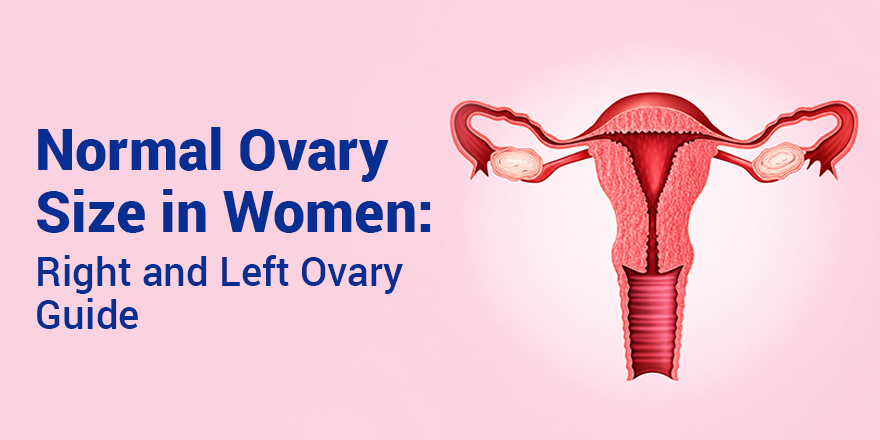
Normal Ovary Size in Women: Right and Left Ovary Guide

Right and Left Ovary Normal Size in Cm
Everybody knows that the ovaries are a pretty crucial factor in female reproductive health. But have you ever thought that their measurements, like the size you can measure on an ultrasound, might matter too? In practice, yes—through the size of the ovary, a healthcare provider can get a rough idea about things like cysts, tumours, and other issues inside the ovary. This blog is basically about the typical right and left ovary size in cm, plus the various factors that can influence pregnancy and the overall size.
Normal Ovary Size in CM
The usual ovary size can really vary based on a various things. Age is one, but hormone levels and overall body type matter as well. For women of reproductive age, the normal ovary size is usually about 2.5-5 cm long, 1.5-3 cm wide, and around 0.6-1.5 cm thick.
In terms of volume, the typical range is roughly 4 to 10 cm³. But when you see a major shift from these measurements, it may hint at an ovarian condition rather than just a harmless normal difference.
The left ovary normal size in mm is typically 30 to 50 mm in length, 15 to 30 mm in width and 6 to 15mm in thickness. However, the total volume generally ranges from 3 to 10mm.
In reproductive age women, right ovary normal size in mm is typically 30 to 50 mm in length, 15 to 30 mm in width and 6 to 15mm in thickness.
In reproductive-age women, a normal right ovary typically measures 30–50 mm in length, 15–30 mm in width, and 6–15 mm in thickness. Normal ovarian volume falls between 3 to 10 mL (or cc
These issues can include PCOS (polycystic ovary syndrome), ovarian insufficiency, and ovarian cysts. Also, it’s important to remember that even in a healthy person, there can be mild differences between the left and right ovary. That’s just normal anatomy, and symmetry doesn’t always mean they match perfectly, so it usually doesn’t call for medical attention. However, if the deviation is more significant than expected, then it’s worth checking with a professional. Your healthcare provider can tell apart “minor” from “concerning” changes, and may suggest treatment if needed.
Factors Influencing Ovarian Size and Pregnancy
Here are some common factors that can affect ovarian size, and also how pregnancy may happen.
Age
Age can strongly affect ovary size and its effect on fertility. In a young girl before puberty, the ovaries are generally smaller. Then, during the reproductive years, they tend to grow toward their fuller size. Later, as menopause moves closer, the ovaries gradually shrink, and they keep shrinking after menopause, too. So, before puberty and again approaching menopause, the egg reserve is reduced. And when the egg count goes down, ovarian size is often affected in a noticeable way.
Hormonal Imbalances
Hormonal imbalances are another key factor impacting both ovarian size and pregnancy. For example, hormone changes can lead to conditions like PCOS (polycystic ovary syndrome). PCOS is often linked with higher androgen levels (androgens are sometimes called “male hormones”) as well as irregular menstrual cycles, and both of those can make conception harder. In addition, PCOS is also associated with many small cyst-like structures, which can cause the ovaries to look enlarged.
Ovarian Cysts and Tumours
Ovarian cysts and tumours—such as hyperreactio luteinalis and corpus luteum cyst—can influence how big the ovary appears, and can also play a role in fertility.
Hyperreactio luteinalis is rare. It involves multiple cysts forming within a thin wall inside the ovary. Those cysts can contain blood or clear fluid. Because the condition is associated with increased pregnancy-related hormone levels, the ovaries may appear larger, especially in situations related to pregnancy.
A corpus luteum cyst is a non-cancerous condition. It forms from the corpus luteum soon after ovulation. These cysts can also grow, and they may make the ovaries look bigger, again partly due to shifting hormone levels during pregnancy.
Medical Conditions
Some medical conditions can interfere with conception, and also change how the ovary size looks on imaging. Examples include endometriosis, ovarian torsion, and PCOS (polycystic ovary syndrome). These can contribute to enlarged ovaries and may disrupt ovulation. On the other hand, certain cancer treatments, along with premature ovarian failure, can cause the ovaries to shrink.
Both directions—enlargement or shrinkage—can make it harder to conceive, and they can also influence the measured ovarian size.
Medical Treatments
Several medical treatments can mainly affect ovarian size and pregnancy, like it or not. For example, IVF ( in vitro fertilisation ) is often done with a whole bunch of hormone medications, to help follicles develop. In the short term, this can make the ovaries look temporarily bigger. Then again, cancer treatments such as radiation and chemotherapy may permanently injure the ovaries and also their roles. When that happens the ovaries can end up looking smaller than they should be, and this may lead to premature menopause or primary ovarian insufficiency . In turn , this kind of change can make it harder to conceive.
Experts Advise to Improve Ovary Health and Size
Maintain a Healthy Diet
Eating in a way that’s full of antioxidants, healthy fats, vitamins, and minerals can really support ovarian size and fertility health. Basically, this dietary approach can lower inflammation, help create more balanced hormones, and optimise reproductive processes.
Exercise Regularly
Getting exercise regularly can largely boost ovarian health and fertility. This is because moderate movement can improve blood circulation to the ovaries, support insulin sensitivity, lower inflammation, and help regulate hormone production. All of this can support healthy follicle development. And yes, that can finally improve fertility outcomes too.
Manage Stress
Learning to manage stress can help ovarian health and fertility at the same time. When stress stays high for a long time, it can disrupt hormone production, which is needed for proper ovulation. That may then cause irregular periods and reduce follicle quality. On the flip side, prolonged stress can push the body toward generating more harmful ROS (reactive oxygen species). That can worsen oxidative stress and impair ovarian function, along with egg quality. So, managing stress using calming methods like meditation and yoga is pretty significant for ovarian health and fertility.
Also Read: Uterus Infection: Causes, Symptoms, Treatment, and Prevention
Avoid Smoking and Excessive Alcohol
Smoking as well as heavy alcohol intake can interfere with hormonal equilibrium and also create problems for implantation and fertilisation. Avoiding both smoking and too much alcohol can support ovarian health and fertility.
Supplements
Some vitamins and supplements can support ovarian health and improve fertility. Supplements like CoQ10, myo-inositol, vitamin D, and omega-3 fatty acids may help improve egg quality, reduce inflammation, and help regulate hormone production. Still, it’s crucial to speak with a healthcare provider before beginning any supplements.
Regular Check-ups
Many fertility specialists suggest that women get their pelvic floor examined regularly, at least once per year. This can help keep track of ovarian health and catch issues early on.
Also Read: Fallopian Tube Blockage Symptoms: Signs Every Woman Should Know
Final Thought
Even if ovarian size can be a sign of women’s reproductive health, it is not the only factor behind infertility. Ovarian size can vary between individuals based on hormone levels, age, and even physique. Lifestyle habits, along with consistent medical check-ups, can mainly help improve ovarian health and fertility. If you're looking for the best IVF centre near you, Seeds of Innocens IVF stands among the best IVF centres in Delhi, known for its advanced fertility solutions and experienced specialists.
Frequently Asked Questions
1. When should you worry about ovary size?
If abnormal size is accompanied by symptoms like irregular menstrual cycle, stabbing pelvic pain, it is suggested to consult a physician.
2. What is the normal ovary size?
A normal adult ovary is approx 3-5 cm long, 1.5-3 cm wide, and 0.6-1.5 cm thick, which varies slightly with menstrual cycle phase.
3. Is the size of the ovary related to fertility?
This is normally the case. Sometimes, there might be temporary swelling due to follicular development.
4. Is there a relationship between fertility and ovary size?
The answer to the question is yes. Even though ovary size do not have a direct association with fertility, healthcare providers use it as an indicator of a woman’s reproductive health. While the larger ovaries might indicate diminished ovarian reserve, which will both impact fertility.
5. How can I improve my ovarian health for better fertility?
For maintaining healthy ovaries and improving fertility, consider these: