



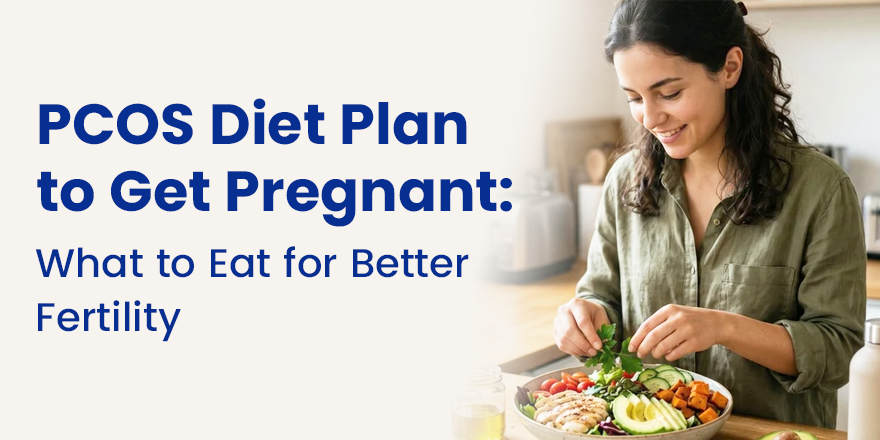
PCOS Diet Plan to Get Pregnant: What to Eat for Better Fertility
PCOS, or polycystic ovary syndrome, is a typical hormone-related disorder that can affect ovulation, menstrual periods, insulin sensitivity, and fertility. Having PCOS may sometimes complicate conception, but it does not necessarily prevent pregnancy since many women with this diagnosis can conceive with appropriate management and fertility assistance.
Proper nutrition is one of the important aspects of managing this condition. A good diet for PCOS women who want to conceive can help to maintain proper blood sugar levels, keep your body weight in check, give you enough nutrients, and support ovulation.
But there is no particular “PCOS pregnancy diet.” Your dietary needs can depend on many factors such as your symptoms, body weight, sensitivity to insulin, medications, and reproductive state. In this blog, we will find out more about diet chart for pcos to get pregnant through which you can improve your health.
How Does Diet Affect PCOS and Fertility?
PCOS is linked with insulin resistance. If the body does not react well to insulin, it may increase production of insulin in the pancreas. This can affect hormonal balance as well as ovulation in women.
For a PCOS fertility diet, a balanced diet includes:
- Fiber-rich food
- Food rich in protein
- Healthy fat
- Unprocessed carbohydrates and whole grains
- Vegetables and fruits in abundance
- Hydration
- Less consumption of processed and sugary foods
- Instead of a strict diet, sustainable eating practices are beneficial.
PCOS Diet Plan to Get Pregnant: Foods to Include
If you’re searching for pcos indian diet plan to get pregnant, then try to include foods that contain protein, fiber, vitamins, minerals, and healthy fats.
1. Include High Fiber Foods
They will not only fill you up but may also be helpful for maintaining proper blood glucose levels. You need to add veggies, legumes, beans, oats, whole grains, and seeds to your meals.
Such high-fiber foods are:
- Oats
- Brown rice
- Wheat roti
- Quinoa
- Chia seeds
- Flaxseeds
- Lentils and beans
- Greens
2. Try to Incorporate Protein into All Your Meals
It will make them more balanced and satisfy your appetite. Such foods as following can serve as good protein sources for your PCOS Indian diet chart to conceive:
- Eggs
- Paneer
- Curd/Greek yogurt
- Dal
- Rajma
- Chana
- Soja/soy/tofu
- Chicken
- Fish
If you’re a vegetarian lady, then you can mix dal with grains to create protein-rich food.
3. Healthy Fats
Healthy fats are an important component of a healthy, balanced diet. Nuts, seeds, avocado, olive oil, and fatty fish like salmon may be added to your diet in moderation wherever applicable.
You do not need to cut out fats, but eat healthier alternatives in moderate amounts.
4. Eat a Lot of Vegetables and Whole Fruits
Fruits and vegetables provide fiber and vitamins and minerals.
Eat more foods like berries, apples, guava, oranges, pears, papaya, vegetables, spinach, broccoli, carrots, and capsicum.
Try not to consume too many fruit juices; instead, go for whole fruits.
Diet Plan For PCOS Women in India To Help Them Conceive
Below is a sample diet plan that can be followed. The portions will depend on your nutritional needs, physical activity levels, and other factors.
| Time | Meal | PCOS-Friendly Options |
|---|---|---|
| Early morning | Hydration | Water; unsweetened beverage if preferred |
| Breakfast | Protein + fiber | Vegetable oats/upma + eggs OR moong dal chilla + curd |
| Mid-morning | Fruit | Guava/apple/orange/berries + a few nuts |
| Lunch | Balanced meal | 2 whole-wheat rotis + dal/paneer/chicken + vegetables + salad |
| Evening | Healthy snack | Roasted chana, nuts, sprouts, or unsweetened curd |
| Dinner | Light balanced meal | Vegetable soup + paneer/tofu/chicken OR roti + vegetables + dal |
| If needed | Bedtime | Unsweetened milk/curd, depending on individual needs |
The above PCOS pregnancy diet plan cannot serve as an alternative to personalized dietary counseling.
Limit These Foods in a PCOS Diet Plan
A PCOS pregnancy diet plan need not always involve cutting down on all your favorite foods. Nonetheless, consuming foods that have been processed using a lot of sugar and refined carbs can make it hard to maintain control over blood glucose levels.
You should avoid or limit:
- Sugary beverages and packaged fruit juices
- Sweeteners and desserts
- Processed breads and baked goods
- Over-processed snacks
- Deep-fried foods
- Sugary breakfast cereals
- Too much fast food
Rather than thinking about what foods to exclude, try considering what you can add to your diet, such as more veggies, proteins, fiber, whole grains, nuts, seeds, and minimally processed foods.
Does Weight Loss Help PCOS Fertility?
Even for women with PCOS who are slightly overweight, weight loss may help improve their metabolic profile and even fertility. However, weight loss is not the only thing that you have to achieve through PMOS treatment, as women who have PCOS may suffer from fertility issues even when they have a healthy body weight.
Thus, your fertility treatment plan should be based on your individual
If you are searching for an Infertility Hospital in India, choosing a center with experienced fertility specialists and comprehensive diagnostic and treatment facilities can help you understand your options.
Lifestyle Advice Along With a PCOS Fertility Diet
Diet is most effective when combined with a healthy lifestyle approach. In addition to adhering to a healthy PCOS fertility diet, consider:
- Regular exercise
- Maintaining a consistent sleeping pattern
- Stress management
- Not smoking
- Alcohol reduction
- Using prenatal vitamins like folic acid as recommended by your doctor
- Monitoring your periods and ovulation when necessary
Above all, do not delay consulting a doctor if you have been trying unsuccessfully to conceive.
When Should You Consult a Fertility Specialist?
If you have PCOS, this does not necessarily imply that you need to resort to IVF therapy. According to your circumstances, treatment options might consist of lifestyle modifications, fertility medicines to induce ovulation, or other fertility therapies.
You should consult a fertility specialist if:
- Your periods are infrequent and/or unpredictable
- You are not sure whether you are ovulating
- You have been unable to conceive successfully
- You have other fertility concerns
- You want to check your ovarian reserve or reproductive health
A fertility specialist will be able to examine both partners and advise appropriate treatment according to the underlying condition rather than through a diet alone.
Does a PCOS Diet Guarantee Conception?
No, there isn't any specific food, dietary supplement, or PMOS diet to conceive that will give guarantees of conception.
Diet can improve health overall; however, fertility depends not only on ovulation but on many aspects such as a woman's age, ovarian reserve, sperm quality, fallopian tube health, and many others.
The most appropriate strategy would be combining proper nutrition, lifestyle management, adequate medical treatment, and fertility assessment.
Does a PCOS Diet Guarantee Conception?
No, there isn't any specific food, dietary supplement, or PCOS diet to conceive that will give guarantees of conception.
Diet can improve health overall; however, fertility depends not only on ovulation but on many aspects such as a woman's age, ovarian reserve, sperm quality, fallopian tube health, and many others.
The most appropriate strategy would be combining proper nutrition, lifestyle management, adequate medical treatment, and fertility assessment.
Also Read: PCOS Infertility: Causes, Impact, and Effective Treatment Options
Conclusion
Adopting a healthy PCOS fertility diet can be an effective step if you want to conceive. Rather than chasing after miracle diets, focus on adopting long-term strategies like adding more fiber into your diet, having protein in your meals, eating healthy fats, choosing whole foods, and avoiding heavily processed and sugar-filled foods.
If you have PCOS and find it difficult to conceive, remember that PCOS-related infertility is curable. An individualized assessment will help reveal whether infertility is related to irregular ovulation or other fertility problems.
If you're looking for the Best IVF Hospital in India or want to consult a Best IVF Doctor in India, consider seeking guidance from an experienced fertility team who can assess your individual condition and recommend the most appropriate treatment.
Also Read: Pcos IVF And The Menstrual Cycle
Frequently Asked Questions
1. What is the right diet for PCOS to conceive?
A pcos fertility diet with plenty of vegetables, whole grains, proteins, healthy fats, fruits, nuts, and seeds is recommended to help you stay healthy and fertile.
2. Which Indian foods are good for PCOS patients for conceiving?
Healthy Indian foods like dal, chana, rajma, eggs, paneer, curd, vegetables, whole wheat roti, oats, brown rice, nuts, seeds, and fruits can be included in your Indian PCOS diet plan to conceive. Avoid focusing on cutting down food groups from your diet.
3. What foods should I avoid in case of PMOS while conceiving?
It is best to avoid foods loaded with excess sugar and refined carbs such as soft drinks, confectionery items, junk foods, and refined bakery items.
4. Will a PCOS diet increase my chances of getting pregnant?
A good diet will certainly help with metabolism and general reproductive health in PCOS. It can help in other areas like maintaining a healthy weight and controlling blood sugar levels.
5. Will PCOS prevent me from getting pregnant naturally?
No. There are many cases where women have conceived naturally despite suffering from PCOS.