




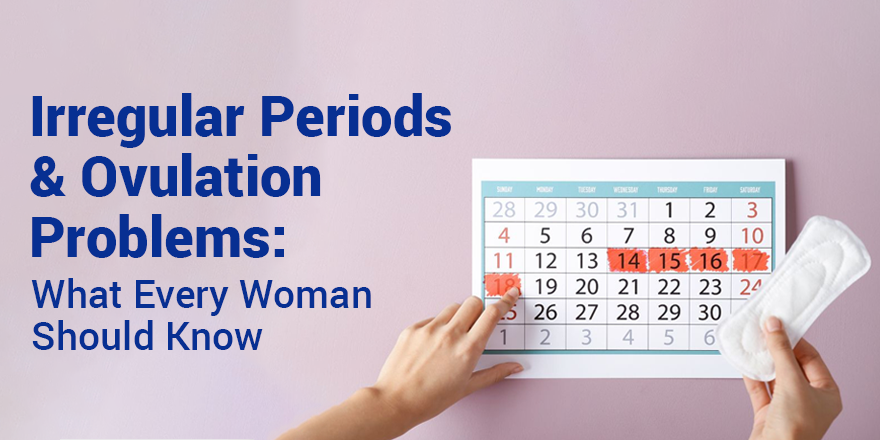
Irregular Periods & Ovulation Problems: What Every Woman Should Know
If you are experiencing irregular periods, then you know how frustrating and concerning it can be. One month, your cycle begins on time, and the next it's delayed. However, beyond the inconvenience, irregular menstrual cycles often signal underlying ovulation issues that will affect your hormones, fertility, and overall health. Let's find out more about what irregular periods are and the reasons for irregular periods. In addition, if you are facing the same issue and searching for the best fertility center, then Seeds of Innocens IVF is the best fertility clinic where you will find ample solutions and guidance for your problems.
Understanding the Connection Between Periods and Ovulation
Your menstrual cycle and ovulation are interconnected, and in a typical cycle, when your ovaries release an egg around day 14, and if that egg is not fertilized, then your period arrives about two weeks later. If ovulation does not happen regularly at all, then your periods become unpredictable or might disappear entirely.
With PCOS, your ovaries produce excess androgens, which can affect regular ovulation. Moreover, women with PCOS often experience periods that come sporadically, that is, sometimes months apart, with symptoms like acne, weight gain, and unwanted hair growth.
Causes of irregular periods
1. Thyroid Disorders
The thyroid gland plays a crucial role in menstrual regularity. However, both Hypothyroidism (underactive thyroid) and Hyperthyroidism (overactive thyroid) can throw your cycle off track. However, the thyroid will help regulate your metabolism and hormone production, so when it gets disturbed, your ovulation suffers too.
2. Stress and Lifestyle Factors
Chronic stress elevates cortisol levels that can suppress the hormones that are needed for ovulation. Similarly, like this rapid weight loss or gain, excessive exercise can all signal to your body that now is not a good time to ovulate.
3. Premature Ovarian Insufficiency
Sometimes the ovaries stop functioning before age 40. This condition is well known as premature ovarian insufficiency or early menopause. However, it will result in irregular periods that will reduce fertility. However, it's less common but more important to rule out, especially if you are experiencing other menopausal symptoms such as hot flashes.
Signs Your Ovulation Might Be Off
Several reasons can affect your periods. Let's look at some of these signs that are:
Your cycle length varies from month to month.
Your periods are skipping for several months.
Your periods are extremely light or heavy.
You are having trouble conceiving after years of trying.
Your periods come more than 35 days apart or even less than 21 days.
How it Impacts Fertility?
If you are trying to conceive, irregular ovulation can affect your fertility. Without regular ovulation, no egg can be fertilized, which makes pregnancy impossible or difficult. Even if you ovulate occasionally, unpredictable cycles will make timing intercourse challenging. However, the good news is that many ovulation issues are treatable with the right approach, and most women can improve their fertility. However, if you are looking for ivf treatment in Delhi, then Seeds of Innocens IVF offers the right diagnosis with the right treatment.
What You Can Do About It?
1. Track Your Symptoms
By keeping detailed notes of your cycle, which includes flow, length, and any symptoms you experience. However, an ovulation calculator for irregular periods is also helpful. You can also track body temperature and use ovulation predictor kits to accumulate data on whether you are ovulating.
2. Consult Your Doctor
It is crucial to consult the doctor if you are under 35 and suffering from irregular periods for six months or you are over 35 with three months of irregularity. Your doctor can run blood tests to check hormone levels and other markers. However, an ultrasound might reveal PCOS or other structural problems.
3. Medical Treatments
Relying on the underlying cause, treatment options can include:
Birth control pills to regulate cycles or 21 days tablet for irregular periods( If you are not trying to conceive)
Thyroid Medication for Thyroid Disorders
The Bottom Line
Irregular periods and ovulation problems are common, but that doesn't mean that you should ignore them. If you are concerned about fertility, paying attention to your menstrual cycle will help in improving your overall health. So, don't hesitate to consult the doctor if you are facing these problems, as your menstrual health matters not just for fertility but for the long-term too. However, if you are looking for the best IVF centre in Delhi, then do book your consultation now with Seeds of Innocens IVF, from where you can start your parenthood journey.
Frequently Asked Questions
1. What are irregular periods?
Irregular periods are menstrual cycles that are unpredictable, and they might come too early or too late or vary in duration and flow. However, a normal cycle ranges between 21 and 35 days.
2. What can I do to determine if I'm ovulating?
One of the biggest indicators of ovulation is a regular menstrual cycle, as there are electronic apps and ovulation predictor kits through which you can track.
3. What causes irregular periods?
Some of the common causes include:
Hormonal imbalance
PCOS (Polycystic Ovary Syndrome)
Thyroid disorders
Stress
4. What are ovulation problems?
Ovulation problems happen when the ovary does not release an egg regularly. This condition is well-known as anovulation, and it is one of the main causes of infertility.
5. How are irregular periods linked to ovulation issues?
If your periods are irregular, then it often means that you might not be ovulating regularly, and without ovulation, pregnancy cannot happen naturally.