




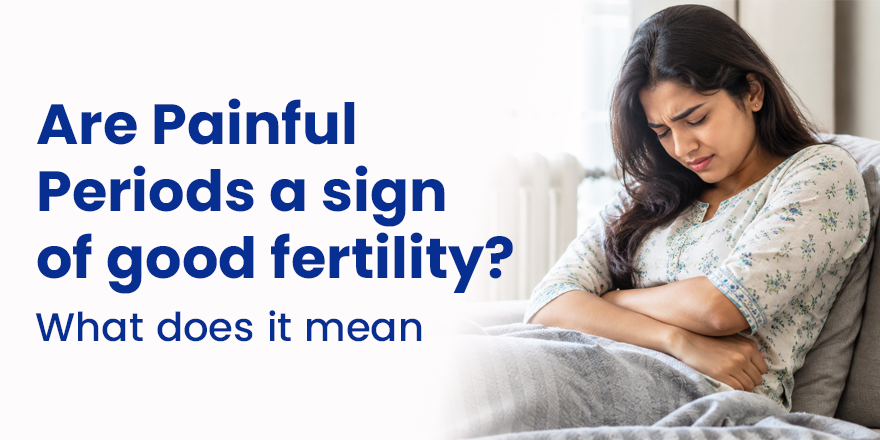
Are Painful Periods a Sign of Good Fertility? What Does It Mean?
Period pain is an experience that many women encounter regularly. While some may only experience mild pain, others can suffer from severe cramps to the extent that they affect their daily activities. This prompts the usual query: Is having painful periods a mark of good fertility?
It is important to note that this is not true. Having painful periods does not guarantee good fertility. While some women experience period pain and yet have perfect reproductive organs, there are instances where excessive and abnormal pain is associated with conditions that can negatively impact fertility.
Knowing what kinds of period pain exist, the causes of these pains, and other factors related to reproduction will definitely come in handy. This blog tells you more about are painful periods a sign of good fertility?
Does Having Period Cramps Indicate That You Have Good Fertility?
Period cramps, also referred to as dysmenorrhea, typically result from contraction of the uterus when menstruating. Contractions are caused by chemical compounds referred to as prostaglandins that play a role in shedding the uterine lining.
Having period cramps doesn’t mean that your ovaries are working well or that you have good fertility. Likewise, not having any period cramps doesn’t mean you lack fertility.
Thus, experiencing any pain during periods doesn’t necessarily show that you have good fertility or lack fertility.
Nevertheless, the different types of Period Pain can at times give some hints regarding your fertility.
Types of Period Pain
Period pain is broadly classified into two types:
1. Primary Dysmenorrhea
Primary dysmenorrhea is characterized by menstrual cramps not due to any underlying condition. The menstrual cramps usually start at adolescence and get better as one ages or after pregnancy.
Symptoms may include:
- Abdominal cramps
- Backache
- Thigh pains
- Nausea
- Headache
- Fatigue
- Moderate primary period pain is normal and not associated with infertility.
2. Secondary Dysmenorrhea
Secondary dysmenorrhea is defined by period pain caused by a reproductive or pelvic condition. Secondary dysmenorrhea develops later in life and gets progressively worse.
Conditions that cause secondary period pain include:
- Endometriosis
- Adenomyosis
- Uterine fibroids
- Pelvic inflammatory disease
- Ovarian cysts
- Structural problems in the uterus
Conditions such as endometriosis may lead to fertility problems in some women. This is the reason why chronic or severe period pain should not be ignored.
Is Severe Period Pain a Cause for Infertility?
Severe period pain is not necessarily an indicator of infertility. But extreme pain that impacts your capacity to work, study, sleep, exercise, or do any routine activity requires medical assessment.
You should think about seeking help from a gynecologist if:
- Your period pain keeps worsening.
- The pain does not resolve using regular ways of dealing with period pain.
- You have pain outside of your period.
- You have pain during or after sex.
- You have pain when defecating or urinating, especially at the time of your period.
- You haven’t conceived even though you’re actively trying.
- Your periods have unexpectedly become more painful than they used to be.
- These signs may happen with some conditions that can impact your fertility.
Do Heavy Periods Mean Fertility?
There’s another myth that heavy periods mean good fertility.
But that’s not true.
Menstrual bleeding doesn’t necessarily say anything about the state of your eggs, ovulatory potential or the chances of conception. There could be several reasons for heavy periods, such as hormonal disorders, fibroids, adenomyosis, endometriosis, thyroid disorders, or any other problem of the uterus and the reproductive system.
In case your periods are abnormally heavy or long, or you often need to change your sanitary napkins, talk to a healthcare provider about your condition.
Is Period Pain Good or Bad?
So, are painful periods a sign of good fertility?
It is normal to experience occasional light cramps during menstruation, but heavy, frequent, or increasing pain cannot be considered an indicator of increased fertility.
Your periods can give you some valuable information about your reproductive health, but pain during periods cannot serve as a fertility test.
The following factors influence your fertility:
- Ovulation
- Quality and quantity of eggs
- Fallopian tubes
- Uterus
- Hormones
- Sperm health of your partner
- Your age and reproductive health
What are the Signs of Good Fertility?
There is nothing that can tell you about good fertility on its own. However, some menstrual patterns can show you that your reproductive system works fine.
These may include:
Regular Cycles
Regular cycles may indicate that ovulation happens regularly, although regular cycles don’t prove anything by themselves.
Ovulation Indicators
Some women feel changes related to ovulation, like clear stretchy cervical mucus, mid-cycle discomfort, or changes in the basal body temperature.
Predictable Cycles
If you have relatively predictable menstrual cycles, you might be sure about your hormonal balance.
Nevertheless, even having regular periods doesn’t mean that you can have no fertility issues. At the same time, irregular periods don’t always mean that getting pregnant will be impossible for you.
Signs and Symptoms of Infertility to Look for
Fertility problems may not present clear signs in many cases. Nevertheless, here are signs that could indicate that you should seek out advice from an expert:
- Irregular or absence of periods
- Extremely painful periods
- Heavy menstrual bleeding
- Painful intercourse
- Indicators of endometriosis
- History of pelvic infections
- Multiple miscarriages
- Difficulty getting pregnant despite regular sex
When couples are trying to conceive, getting professional advice on time could help in early detection of problems.
| Type of Period Pain | What It May Mean | Is It Usually a Fertility Concern? |
|---|---|---|
| Mild cramps during periods | Common uterine contractions caused by prostaglandins | Usually no |
| Moderate cramps | Can be part of a normal menstrual cycle | Usually no, but monitor symptoms |
| Severe or extreme period pain | May sometimes be associated with endometriosis, adenomyosis, fibroids, or other conditions | May require evaluation |
| Pain that gets worse over time | Could indicate an underlying pelvic condition | Should be evaluated |
| Pain between periods | May be related to an underlying reproductive or pelvic condition | Needs medical assessment |
| Pain during intercourse | Can sometimes occur with endometriosis or other pelvic conditions | May warrant evaluation |
| Pain with heavy bleeding | Can occur with fibroids, adenomyosis, hormonal changes, or other conditions | Depends on the underlying cause |
Is It Possible to Have Painful Periods While Pregnant?
Normally, one will not have a period while being pregnant. However, some women can experience cramping and bleeding in early pregnancy that could be misinterpreted as period.
If one experiences unusual vaginal bleeding and pelvic pain and is possibly pregnant, one should take a pregnancy test and seek professional advice.
Abdominal or pelvic pain, especially with heavy bleeding, lightheadedness, loss of consciousness, or pain in the shoulders, should be attended to urgently.
When to Visit a Fertility Specialist?
If you have been actively trying to conceive and are experiencing painful periods, you need to talk to your doctor, preferably a gynecologist or a fertility specialist.
Your fertility specialist may carry out various tests to assess your menstrual history, your ovulation process, ovarian reserve, uterus and fallopian tubes, as well as the male partner if necessary.
The aim of a fertility test is not only to define whether you are fertile but also to identify all the aspects which may influence your reproductive system.
Final Thought
Are painful periods an indicator of good fertility? Not always.
Having mild period cramps is normal and may be part of the menstrual cycle. But extreme period pains, worsening cramps, heavy bleeding, pain between periods cannot be regarded as a sign of your fertility. Some of these symptoms may be associated with conditions which can make conceiving difficult.
Similarly, heavy periods are no sign of higher fertility levels.
In case you find any concern in regard to your menstrual symptoms or have been facing problems in conception, consultation with a fertility expert will help you gain insight into your reproductive health and possible ways to tackle your issues.
In case you wish to know more about Infertility Hospital in India, opting for Seeds of Innocens that provides experience of fertility experts, complete diagnostic facilities, and customized treatment plans will go a long way in helping you. In case you are seeking for assisted reproductive treatment options, one can look for Best IVF Centre in India considering medical proficiency, treatment options, laboratory facilities, success rates, and patient care. For personal assistance in this regard, you can consult a qualified fertility expert or Best IVF Doctor in India.
Also Read: Negative Pregnancy Test but No Period: What Does It Mean?
Frequently Asked Questions
1. Do painful periods indicate that fertility is good?
No, Not necessarily. Painful periods are good sign that you are fertile. Light cramps may be a usual phenomenon, but heavy and worsening pain might mean that there is a problem, like endometriosis or fibroids.
2. Does pain in the period mean that you have a good or bad period?
Light cramps are usual, but if you have severe, persistent, or worsening pain, you need to see your gynecologist since it might indicate a problem.
3. Do heavy periods mean that fertility is good?
No, Heavy period bleeding does not mean that you are fertile; you may experience it due to hormonal changes, fibroids, adenomyosis, endometriosis, etc.
4. Can a person experience a painful period and be pregnant?
Pregnancy cannot be characterized by a period, but some women have cramps and even bleed during pregnancy.
5. What are the indicators that show healthy fertility?
Healthy menstrual cycles and ovulation may be an indicator of healthy reproductive function; however, it does not prove fertility. There are many more factors than just ovulation and the menstrual cycle