




Adenomyosis: Symptoms, Causes, Treatment and When to See a Specialist
In case your periods are painful, you suffer from heavy menstrual bleeding or constant pelvic pain, chances are that you might have heard about adenomyosis. However, what is adenomyosis? How does adenomyosis impact the uterus?
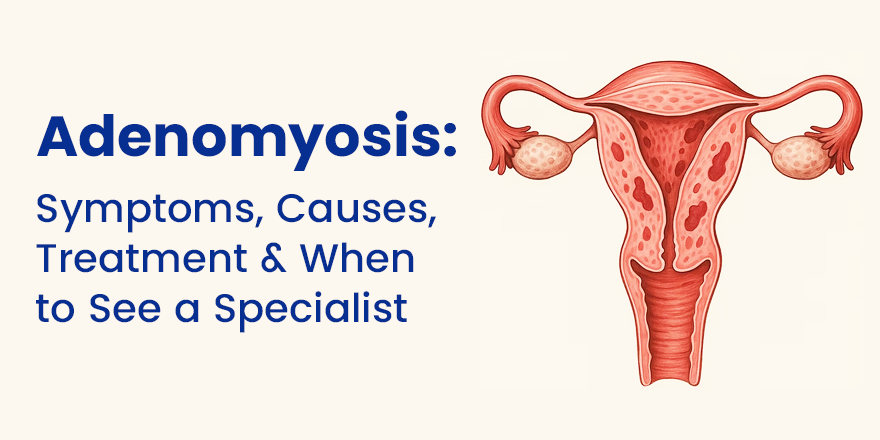
Adenomyosis is an abnormal condition, where tissue similar to uterine lining grows within the muscular wall of the uterus. This leads to the increase in the size of the uterus, its tenderness and pain.
Adenomyosis is sometimes called uterine adenomyosis and impacts women in different ways. Some women suffer from quite serious symptoms, whereas other women might be asymptomatic.
Knowledge of adenomyosis symptoms will help women to undergo proper evaluation and discuss adenomyosis treatments with a specialist.
What are the causes of Adenomyosis?
While the cause of adenomyosis may not always be clearly known, a number of factors have been linked to this condition by researchers and physicians.
Factors that may lead to adenomyosis may include the following:
- Hormones such as oestrogen
- Uterus surgical operation before
- Changes in the uterus due to childbirth
- Inflammation in the uterine wall
- Changes in the interface between the uterus lining and muscles
This condition usually occurs among women in their reproductive years, although it may differ according to age and hormonal changes in some cases.
What Are The Symptoms of Adenomyosis?
Symptoms for adenomyosis may vary from individual to individual and many women do not realise they have the condition until an internal examination or scan is conducted.
Some of the symptoms of adenomyosis include the following:
1. Heavy periods
Menstrual periods will become very heavy compared to before.
2. Severe period pain
Period pain that is too severe to carry out daily activities may be one of the symptoms of adenomyosis.
3. Persistent Pelvic Pain
Sometimes, women might have pelvic pain even when they are not having their period.
4. Pain While Having Intercourse
Pain or discomfort while having intercourse is possible in some cases.
5. Feeling of Pressure in the Lower Part of the Abdomen
The enlarged uterus can cause a feeling of pressure or heaviness in the pelvis.
6. Feeling of Bloating or Enlarged Lower Abdomen
Some women look for information related to the adenomyosis belly as the condition can sometimes cause an enlarged uterus, which leads to lower abdominal bloating or enlargement.
It should be noted that the abdominal enlargement can happen due to many different reasons. It is crucial not to diagnose yourself only by the way your belly looks and to see a gynecologist.
How Does the Adenomyosis Belly Look Like?
“Adenomyosis belly” is a term that is frequently used online to describe lower abdominal bloating or fullness in women.
As adenomyosis causes an enlarged uterus, some women can feel:
- Lower abdominal bloating
- Feeling of heaviness
- Pelvic fullness
There are no exact adenomyosis pictures that will help you diagnose the condition from your photo. Two women suffering from adenomyosis may have completely different looks.
Uterine adenomyosis is diagnosed after a thorough examination and testing. It has nothing to do with the photos and appearance of patients.
How Is Uterine Adenomyosis Diagnosed?
Uterine adenomyosis can be diagnosed only after the examination conducted by gynaecologist or specialist.
For example, the diagnosis may include:
Medical history
Questions may be related to your menstruation, bleeding, pelvic pain and other symptoms.
Pelvic exam
A pelvic exam may reveal an enlarged or painful uterus.
Transvaginal ultrasound
This test helps to evaluate the changes in the uterine muscles.
MRI
Sometimes this test may be necessary for a more detailed examination of uterine tissue. As the symptoms of uterine adenomyosis are similar to those of other disorders (such as fibroids and endometriosis), it is very important to make the right diagnosis first.
Is Adenomyosis Cancer?
A common concern of many women is whether adenomyosis has any connection to cancer. Adenomyosis is typically viewed as a benign non-cancerous disorder.
Women who try to search for symptoms of adenomyosis cancer have this concern since heavy bleeding and pelvic pain might occur in other gynecological disorders as well.
However, it should be noted that any irregularity in menstruation or pelvic symptoms require medical attention from a qualified professional. He or she will be able to identify whether it is a case of adenomyosis or any other gynecological problem requiring additional research.
Adenomyosis vs Other Gynecological Disorders
Sometimes adenomyosis can be mistaken with other conditions since symptoms may coincide.
Adenomyosis vs Fibroids
Fibroids are benign tumors that occur in the uterus or its surroundings. Adenomyosis is characterized by tissue growth in the muscular wall of the uterus.
Both disorders lead to:
- Heavy periods
- Pelvic pressure
- Pain
- Enlarged uterus
Adenomyosis vs Endometriosis
Endometriosis occurs when there is tissue, which resembles uterine lining, growing outside of the uterus. In adenomyosis this tissue grows in the wall of the uterus. Some women can suffer from both disorders simultaneously.
What Treatments for Adenomyosis Are There?
There is no single treatment method that will fit every female patient. Factors influencing adenomyosis treatment include the following:
- Severity of symptoms
- Age
- Spread of the condition
- Future plans of conceiving children
- General health state
- Previous experience
The treatment methods may vary and include the following.
1. Managing the Pain
For those patients whose symptoms are relatively mild, doctors may advise using certain drugs to help relieve menstrual pain.
2. Hormonal Therapy
The use of hormonal therapy is also considered when there is a necessity to reduce heavy blood flow and alleviate symptoms.
3. Minimally Invasive and Preservative of the Uterus Approaches
Depending on the particular situation and reproductive plans of the patient, appropriate surgical or minimally invasive interventions can be suggested by specialists.
Every treatment should be personalised based on the patient's individual case.
4. Surgical Treatment
In the cases where symptoms are severe and other treatment approaches do not give enough effect, surgery can be considered.
Each surgery method is chosen depending on the symptoms of the patient, her age and future fertility plans. A gynaecologist will help to understand the advantages and drawbacks of each procedure.
Could Adenomyosis Impact Your Ability to Conceive?
Adenomyosis could potentially make conception difficult for some women. However, there can be a complicated relationship between adenomyosis and fertility.
Not all women with adenomyosis will struggle to conceive.
Other factors that could affect your fertility include age, ovarian reserve, other gynecological disorders and overall reproductive health.
If you plan on conceiving and have adenomyosis, then you must talk to your fertility and gynecological specialist regarding your unique case.
When Should You Visit a Doctor Due to Adenomyosis Symptoms?
You need to visit a specialist if you suffer from:
- Extremely heavy periods
- Severe or increasing period pain
- Continuous pelvic pain
- Pain during sexual intercourse
- Abdominal bloating and pelvic pressure
- Changes in your menstrual cycle
- Difficulties with conception
Also Read: Frozen Embryo Transfer (FET): Procedure, Timeline, Process
Looking for the Best Adenomyosis Doctors in Delhi?
If you have been experiencing symptoms persistently and are looking for the Best Adenomyosis Doctors in Delhi, you will need to choose a centre with experienced gynaecology and surgical experts who can conduct an in-depth assessment.
Patients at Seeds of Innocens Surgical Centre can get special consultations for different kinds of complex gynaecology conditions. An individualised approach is very important since adenomyosis symptoms and treatment methods vary considerably from person to person.
A proper treatment regimen should be chosen based on a proper diagnosis, symptoms' severity, and the patient's personal health status and reproductive goals.
Best Adenomyosis Treatment Doctors in Delhi NCR
If you are a woman and are looking for the Best Adenomyosis Treatment Doctors in Delhi NCR, conducting an expert assessment can be the first step that is very important to take.
At Seeds of Innocens Surgical Centre, the main focus is made on the determination of the cause of your symptoms and discussion of treatment options individually.
An expert consultation can help you to learn more about such things as:
- Is my condition caused by adenomyosis?
- Do I need some imaging?
- Which treatment options do I have?
- Does adenomyosis influence my fertility?
What point should surgery be recommended?
Each individual's case is unique, and any treatment decision should be reached following an extensive consultation with an experienced doctor.
Also Read: Endometriosis: Symptoms, Causes, Treatment and Its Impact on Fertility
Frequently Asked Questions
1. What is adenomyosis?
Adenomyosis refers to the growth of tissue that is similar to the uterine lining inside the muscular wall of the uterus. This can result in menstrual problems like heavy flows and menstrual cramps.
2. What are the most frequent adenomyosis symptoms?
Among the most typical symptoms of adenomyosis are heavy periods, painful periods, pelvic pain, pelvic pressure, and painful intercourse.
3. What is adenomyosis belly?
Adenomyosis belly is the name given to the lower abdominal bloating or fullness resulting from the enlarged uterus. However, symptoms alone are not enough for the diagnosis of adenomyosis.
4. Is adenomyosis a form of cancer?
No, adenomyosis is not cancer. However, it can be a benign disease that requires careful medical examination.
5. Is adenomyosis treatable?
Yes, the treatment of adenomyosis can include pain treatment, hormonal treatment or surgery, depending on the intensity of the symptoms and the reproductive intentions of the individual.
6. Do I need to see a specialist in adenomyosis?
If you have pain during menstruation, excessive bleeding or other symptoms in your pelvis, seeking consultation from a qualified gynaecological specialist will help to identify the reason and recommend appropriate treatment.